
The First Airbus A300 Flight Changed Commercial Aviation: ASG Aerospace marks the milestone
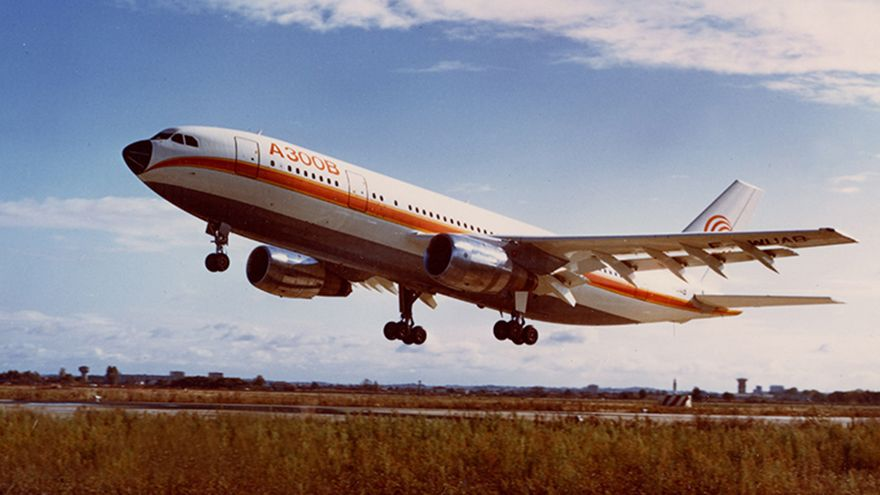
ASG Aerospace is marking the 54th anniversary of the first flight of the Airbus A300, an aircraft that transformed commercial aviation and laid the foundations for one of the world's most successful aerospace manufacturers.
On 28 October 1972, the prototype Airbus A300B1 took to the skies from Toulouse–Blagnac Airport in France, beginning a flight that would establish a new direction for European aircraft manufacturing.
The aircraft, registration F-WUAB, remained airborne for one hour and 25 minutes, completing a successful maiden flight that demonstrated the potential of Europe's first major collaborative commercial aircraft programme.
Developed through an ambitious partnership between European aerospace manufacturers, the A300 became the world's first twin-engine widebody commercial airliner, introducing an aircraft design that would influence passenger aviation for decades.
The programme emerged from an agreement signed by France and West Germany at the Paris Air Show in May 1969, bringing together engineering expertise and industrial capability to develop a new generation of commercial aircraft.
For ASG Aerospace, which supplies precision-engineered components and assemblies to major international aerospace programmes, the anniversary provides an opportunity to recognise the achievements of European aerospace manufacturing and the industrial relationships that continue to support the sector.
Simon Weston, CEO of ASG Aerospace, reflected on the significance of the aircraft's first flight.
"The first flight of the A300 was an extraordinary achievement for European aerospace. It demonstrated what could be accomplished by bringing together engineering expertise, manufacturing capability and a shared commitment to developing a new commercial aircraft.
"Airbus has since become one of the world's most important aircraft manufacturers, and the foundations established through the A300 programme continue to influence the industry today."
The A300 represented a significant advance in commercial aircraft design. Its twin-engine configuration offered airlines the capacity of a widebody aircraft alongside operating efficiencies that would become increasingly important as international passenger demand expanded.
The aircraft entered commercial service with Air France in May 1974, beginning a production programme that would ultimately see more than 800 A300 family aircraft manufactured.
Its development also established the industrial model that would become central to Airbus, with major aircraft structures and systems produced across different European countries before final assembly.
British aerospace manufacturers became important contributors to this approach, particularly through the development and production of aircraft wings, an area in which the UK continues to hold a prominent position.
Weston believes the industrial cooperation established during the early Airbus programme remains particularly relevant as aircraft manufacturers increase production and develop future technologies.
"When you look at the history of Airbus, the strength of its European manufacturing network is one of the most interesting aspects of its development.
"The A300 brought together companies and engineering teams from different countries, each contributing specialist knowledge and manufacturing expertise. That approach has developed into a highly sophisticated international supply chain, with British manufacturers playing an important role."
More than five decades after the A300's maiden flight, Airbus remains central to the UK's aerospace manufacturing industry.
The company's operations at Broughton in North Wales and Filton near Bristol support the development and production of wings for its commercial aircraft programmes, alongside an extensive network of specialist manufacturers throughout the country.
"The progress made in aerospace manufacturing since the A300 first flew has been remarkable. Advances in materials, machining technology, inspection and production processes have enabled aircraft manufacturers to achieve levels of efficiency and performance that would have been difficult to imagine in 1972." Weston continued.
"British engineering businesses have contributed to that progress for generations, and there is considerable opportunity ahead as the industry develops new aircraft and increases production capacity.
"For ASG Aerospace, our focus remains on investing in the people and manufacturing technologies that allow us to contribute to these programmes and support the evolving requirements of our customers."
Today, Airbus aircraft operate across the world's major airline networks, supported by thousands of manufacturing businesses contributing specialist components, assemblies and engineering expertise.
As the industry marks 54 years since the A300 first took flight, the aircraft's legacy remains evident throughout European aerospace, from the production lines of Toulouse and Broughton to the specialist engineering businesses supplying today's commercial aviation programmes.
Source: Airbus
